A bathroom baseboard and a dry living-room baseboard do not necessarily face the same conditions. Splashing, wet cleaning, condensation and exterior-door moisture can affect the vulnerable edge of a trim assembly. Choose the detail around the actual exposure and the selected product's instructions.
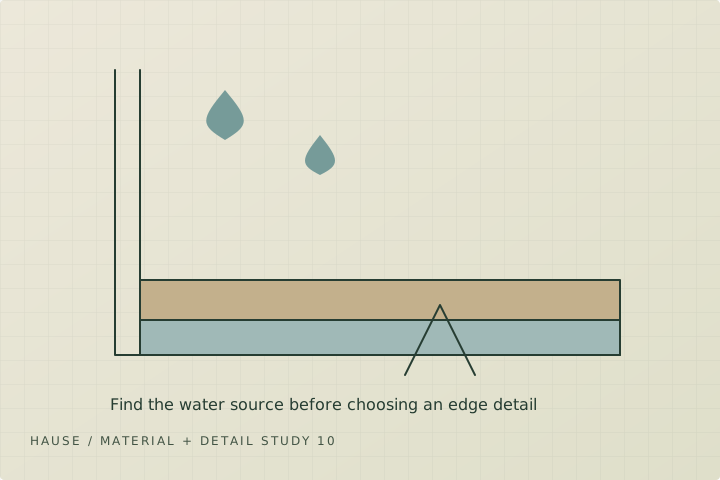
Identify where water reaches the detail
Walk the room's wet edges: the bath, shower enclosure, sink, floor cleaning area and exterior threshold. Look for swelling, staining, softened material or failed coating. Document existing damage before it is covered, and resolve leaks or recurring wetting with the appropriate specialist.
A new taller profile can conceal the old damage while leaving the same exposure in place. The first question is whether the assembly will remain dry enough for the chosen material, not whether more paint can make the old edge look new.
Choose the material and edge treatment together
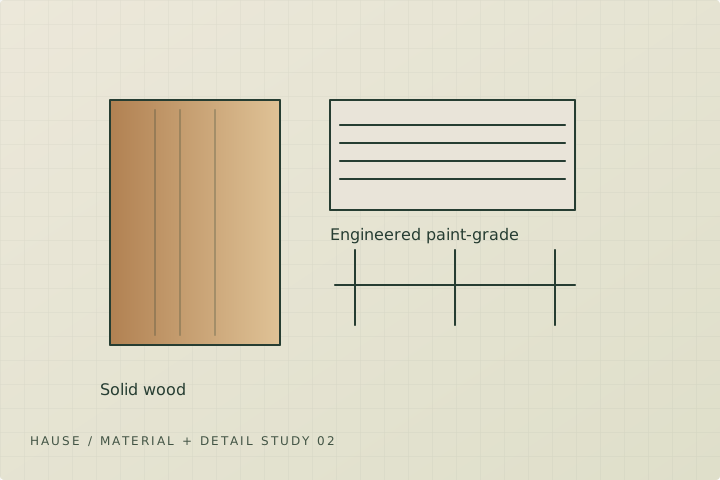
Ask the supplier whether the exact product is suitable for the location. A moisture-resistant label is not the same as permission for standing water or every bathroom detail. Cut edges, joints, fastener locations and the back of a piece may have different preparation requirements from the factory face.
Consider alternative detail approaches such as a compatible tile base or a product designed for the exposure. Compare the look, cleaning access and transitions with the rest of the room. A deliberately different wet-edge detail can be more coherent than forcing a vulnerable material into the same package everywhere.
Coordinate with flooring and enclosure work
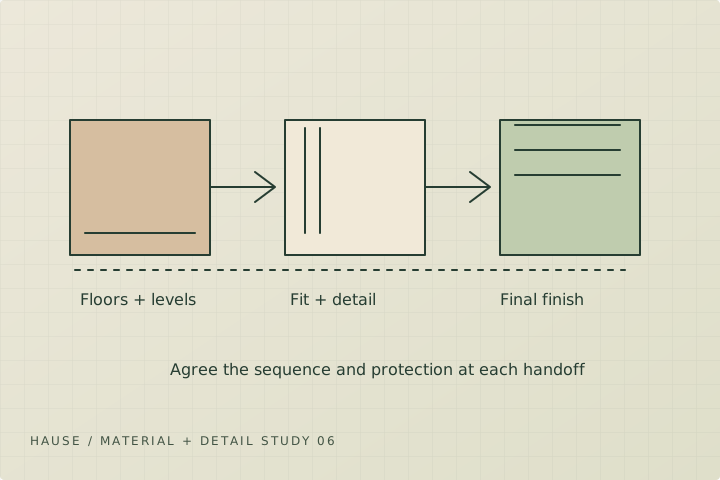
Review where trim meets tile, resilient flooring, the shower enclosure and the door threshold. Keep the flooring and enclosure manufacturer's required joints and clearances intact. Ask which trade owns sealant work and which joints should remain as designed rather than being filled indiscriminately.
A hypothetical powder room with occasional floor cleaning is a different brief from a shower room with repeated splash at the perimeter. Describe how the room is used so the detail is selected for that exposure rather than the room label alone.
Keep maintenance realistic
Ask how the finished surface should be cleaned and what early signs of failure deserve review. Aggressive cleaning, standing water or repeated wetting may exceed a product's intended use. Keep the coating and material records so a local repair uses compatible products.
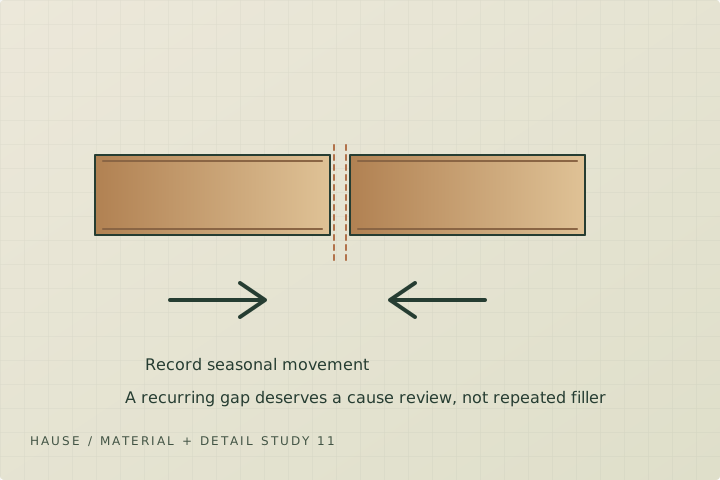
If damage recurs after replacement, investigate the cause rather than repeatedly filling and repainting. An expanding gap, stain or swollen edge provides information about the assembly that a cosmetic repair cannot resolve.
- Exposure and existing damage recorded.
- Leak or recurring wetting addressed.
- Exact material suitability verified with supplier instructions.
- Cut edges and joints included in the preparation plan.
- Flooring/enclosure interface and maintenance requirements agreed.
Sources + further reading
- City of Calgary: Home renovations and basements
- Health Canada: Lead-based paint
- Parks Canada: Standards and guidelines for historic places
- US Forest Service: Wood Handbook
Source review: 2026-10-04. Requirements and programs can change; confirm the current details with the authority or provider.