A flawless painted surface and a visible wood grain ask different things of the material underneath. Start with the finish you actually want, then match the product to the room and the detail. A low purchase price can lose its advantage if it creates extra edge preparation, replacement work or a finish you cannot accept.
Separate appearance from substrate
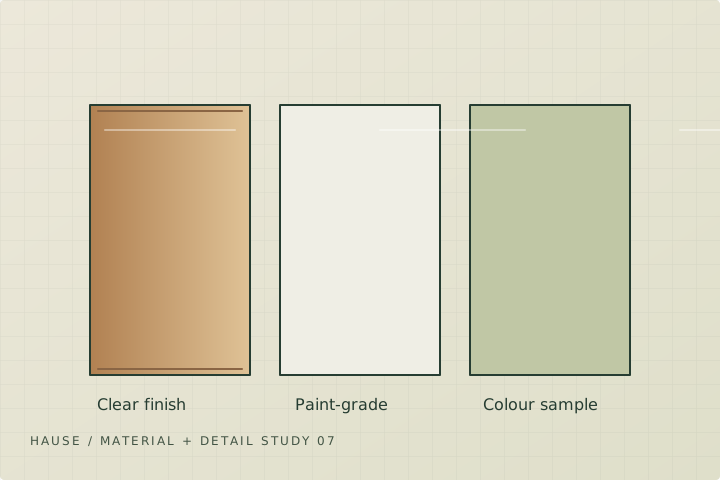
Paint-grade describes an intended opaque finish. Stain-grade describes work where colour and grain remain visible. Those labels alone do not tell you the exact wood species, manufacturing method, moisture suitability or finish condition. Ask for the product identity and a physical sample rather than approving a generic description.
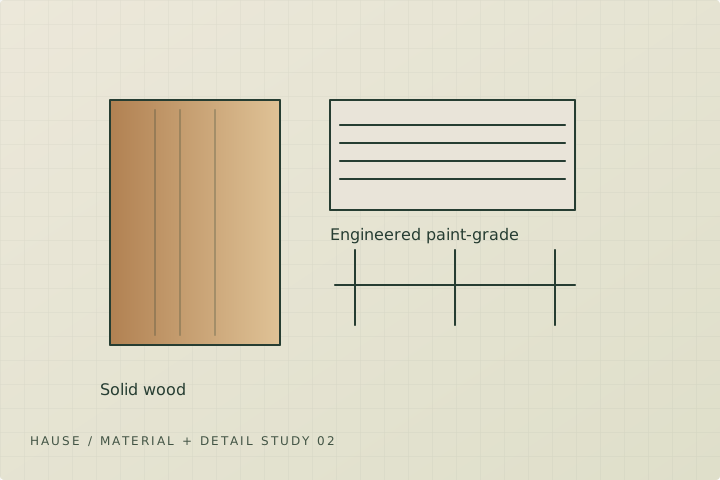
MDF, finger-jointed wood and solid lumber can all appear in a painted package. Each needs a product-specific preparation and fastening plan. For clear or stained work, visible grain, colour variation, knots and joined pieces should be part of the sample discussion before purchase.
| Material option | Planning advantage | Question to resolve |
|---|---|---|
| MDF trim | Consistent paint-grade profile and smooth face | Is this specific product suitable for the room's moisture exposure, and how will cut edges be sealed? |
| Finger-jointed paint-grade wood | A wood-based option for an opaque finish | Will joints or grain telegraph through the selected coating, and what preparation is included? |
| Solid wood | Visible grain and potential for profile matching | Which species, grade and grain variation does the approved sample represent? |
| Product designed for moisture exposure | An option at vulnerable locations | What does the manufacturer permit, and how does the finish integrate with the rest of the room? |
Choose species through an actual finish sample
If the finish is visible wood, compare the sample after the complete finishing system has been applied. Unfinished oak, maple, poplar or softwood cannot show the final effect of stain, sealer and topcoat. Texture, grain contrast and natural colour can produce a different look even under the same stain name.
Ask to see representative pieces, including expected colour variation. Keep the signed-off sample and record the product, preparation and coating schedule. If matching existing trim is the priority, photograph it in daylight and bring a removable piece when safe; a screen image is only a starting point.
Plan for the indoor environment
Wood exchanges moisture with its surroundings and changes dimension. The Forest Service's Wood Handbook explains why drying, storage and service conditions matter. For your project, ask how stock will be stored and how its condition will be checked before fitting; do not rely on an arbitrary number of days alone.
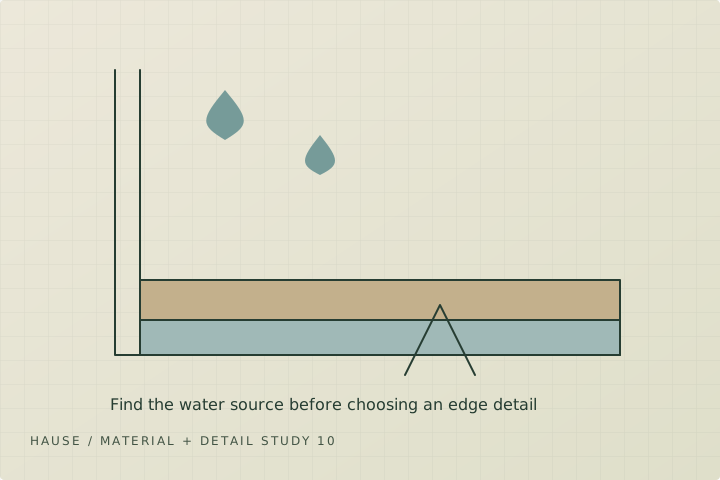
Persistent wetting near a shower, exterior door or leaking window is a separate problem. Resolve the water source and choose a suitable assembly before new trim hides the evidence. A paint coat is not a repair for recurring moisture.
Avoid a material substitution surprise
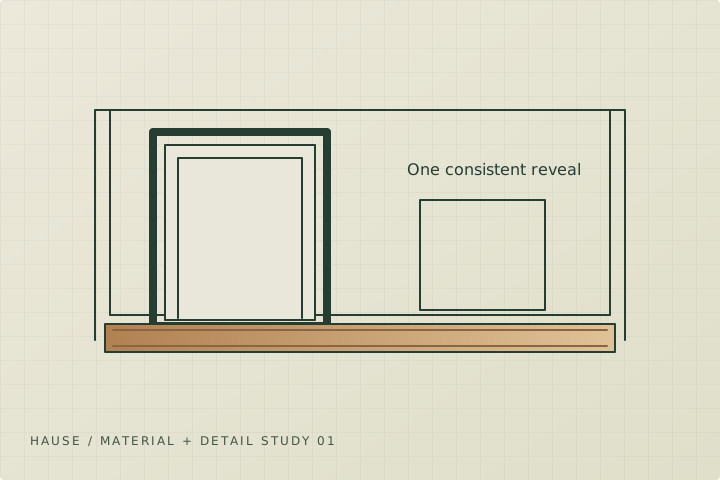
Write material, profile, dimensions, finish and permitted substitutions into the scope. If supply becomes an issue, review the replacement sample at a real junction. A similar profile with a different thickness may change every doorway transition, even when the front view looks nearly identical.
Sources + further reading
Source review: 2026-10-04. Requirements and programs can change; confirm the current details with the authority or provider.