Older trim can hold the room's character in its scale, grain, small irregularities and junctions. Replacing all of it with the closest stock profile can erase those relationships. Begin by documenting what survives and why it matters, then choose the smallest appropriate intervention for the intended result.
Make a profile record before removal
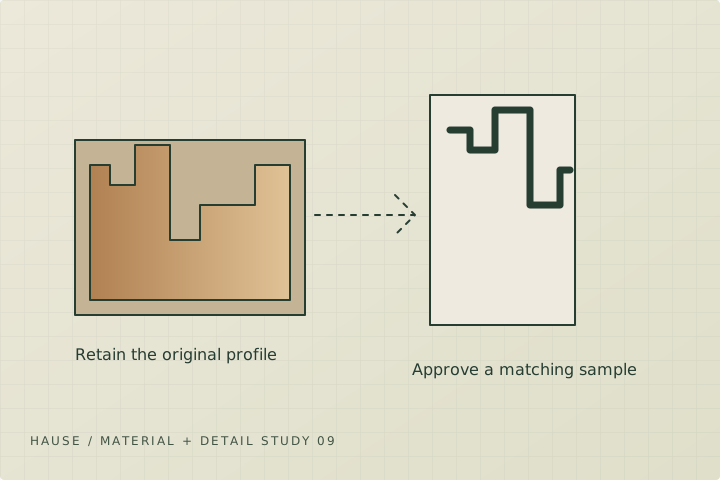
Photograph each distinct baseboard, casing, backband, plinth and crown junction. Record height and thickness and note where the same profile has been altered over time. Label removable samples by room and keep sound original pieces if work proceeds.
Parks Canada's conservation framework begins with heritage value and the choice of treatment. For a recognized historic property, consult the applicable authority and conservation professional before changing significant features. A stock-profile substitution is a design change, even if it covers the same wall edge.
Assess old coatings before disturbance
Health Canada warns that repair or removal of lead-based paint can create exposure, including at doors, windows and other wearing surfaces. Assess uncertain coatings before sanding, scraping or stripping. Keep the removal and containment approach with the specialist assessment rather than improvising it as routine trim preparation.
Also consider what sits behind the trim. Older wall assemblies or renovation materials may need separate evaluation before removal. Finding an unfamiliar material is a reason to pause the disturbance and identify it, not a reason to hide it behind a wider replacement.
Compare repair, adaptation and milling
A local split, dent or missing short section may be a repair candidate when the remaining piece is sound and the finish can be matched. A partly missing room package might use salvaged original stock or custom-milled replacements. Compare those options on a sample junction rather than on profile names alone.
For custom milling, provide a clean profile sample and agree on dimensions, species, finish grade and tolerance with the supplier. Ask how the new material meets the retained work. A slightly altered curve can become obvious when it joins an original length.
Preserve a record for the next repair
A hypothetical older dining room may retain its original casing and backband while a damaged baseboard section is replaced to match. Photograph the completed junction and retain a short replacement offcut. The next person working on the room then has a physical reference instead of guessing from a painted silhouette.
Keep intervention notes, coating products and approved samples with the property records. That small archive helps later phases respect the same decisions and prevents repeated destruction of original material to discover the profile again.
- Original details photographed and measured.
- Heritage approval path checked where applicable.
- Coating and hidden-material concerns assessed.
- Repair and replacement options reviewed on a sample.
- Original and replacement references retained.
Sources + further reading
Source review: 2026-10-04. Requirements and programs can change; confirm the current details with the authority or provider.